
France
Basilica of Our Lady of Alencon
The Basilica of Our Lady of Alençon is a magnificent Gothic church in France, renowned as the baptismal site of Saint Thérèse of Lisieux. Her parents, Sts. Louis and Zélie Martin, were also married in this basilica.
Basilica of Pontmain
In 1871, during the Franco-Prussian War, Mary appeared on a farm to students at the nearby convent school. Her message was written on a banner that unfurled from her feet: "But pray my children. God will hear you in a short time. My Son allows Himself to be moved by compassion." Because of this message, Our Lady of Pontmain is also knows as "Mother of Hope."
Basilica of St. Anne d'Auray
The Basilica of St. Anne d'Auray is a prominent pilgrimage site dedicated to St. Anne, mother of the Virgin Mary and patron saint of Brittany. Between 1623-1625, St. Anne was said to have appeared to a devout local peasant, eventually leading to his discovery of an ancient statue of St. Anne in his field. Today, hundreds of thousands of pilgrims visit the basilica, which houses relics of St. Anne and hosts the "Great Pardon" on her feast day, July 26.
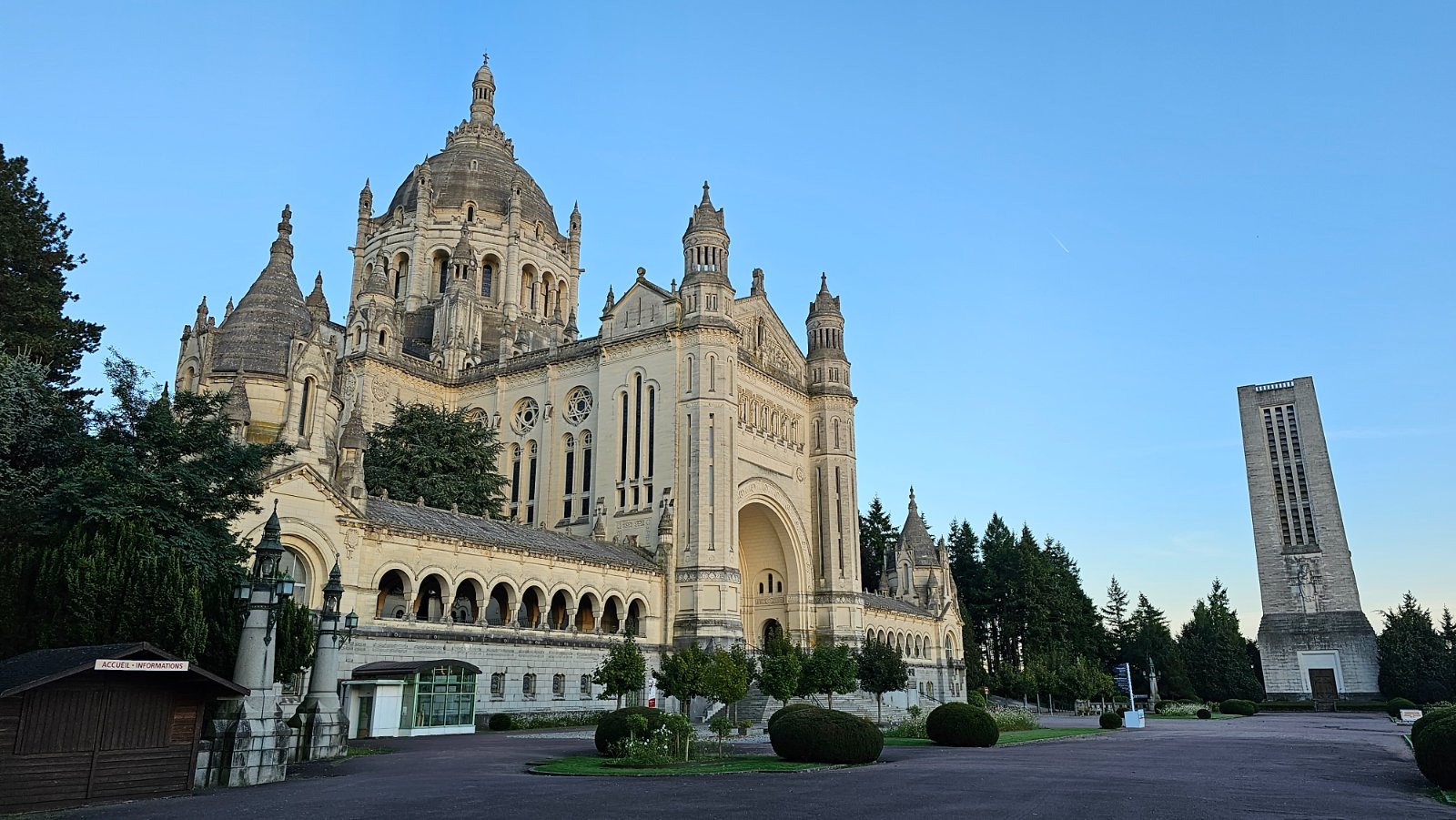
Basilica of St. Therese of Lisieux
The Basilica of St. Therese of Lisieux is the second-largest pilgrimage site in France after Lourdes, dedicated to one of the most popular saints of modern times.
featuredBirthplace of St. Therese
The family home in Alençon where St. Therese was born in 1873, and where the Martin family lived. Today it is the focal point of the Sanctuary of Louis and Zelie.
Cathedral of Our Lady of Puy
In 47 AD, Our Lady appeared to a recent Christian convert, in a chapel built few years before on a high mountain. This woman was plagued by a serious illness and no doctor had been able to help. The Blessed Mother, during her appearance, completely cured her.
Chapel of Our Lady of the Miraculous Medal
Catherine Laboure, a novitiate in the order of the Sisters of Charity, received various visions of St. Vincent de Paul and of Jesus present in the Eucharist, before also experiencing two apparitions of the Blessed Virgin Mary. In the first vision, 1830, Catherine was told of the impending travails of France and of an unspecified future mission. Several months later she received a message detailing the designs for a medal, later known as the Miraculous Medal, now reproduced over a billion times and distributed around the world. The apparition was investigated in 1836 and later approved. St. Catherine worked for 46 more years in hospices of her Order tending to the aged and infirmed, and is now known as the patroness of seniors. Her body currently lies incorrupt at the site of the apparition in Paris (immediate right side of the altar), alongside St. Louise de Marillac (left of the altar) and the heart of St. Vincent de Paul (furthest right).
Sanctuary of Our Lady of La Salette
In 1846, the Blessed Virgin Mary appeared to 11-year-old Maximin Giraud and 14-year-old Melanie Calvat-Mathieu while they tended sheep in a small French Alpine village. Her appearance in sorrow and tears called for conversion and repentance.
Sanctuary of Our Lady of Laus
Benoite Rencurel, a poor shepherdess, received apparitions from the Virgin Mary from 1664 until her death in 1718. During the apparitions, the Blessed Mother asked for a church and a house for priests to be built, with the intent of drawing people to greater conversion, especially through the sacrament of penance. The holy site now draws 120,000 pilgrims annually, and is associated with numerous physical healings.
Sanctuary of Our Lady of Lourdes
In a series of apparitions in 1858, the Virgin Mary appeared to St. Bernadette Soubirous. The stream of holy water which St. Bernadette uncovered has become a well-known source of healing, and Lourdes is now a major pilgrimage destination.
St. Vincent De Paul Chapel
Vincentian church housing the relics of Sts. Vincent de Paul and Jean-Gabriel Perboyre. St. Vincent de Paul's heart is nearby at the more famous Miraculous Medal Chapel.
France
Basilica of Our Lady of Alencon
The Basilica of Our Lady of Alençon is a magnificent Gothic church in France, renowned as the baptismal site of Saint Thérèse of Lisieux. Her parents, Sts. Louis and Zélie Martin, were also married in this basilica.
Basilica of Pontmain
In 1871, during the Franco-Prussian War, Mary appeared on a farm to students at the nearby convent school. Her message was written on a banner that unfurled from her feet: "But pray my children. God will hear you in a short time. My Son allows Himself to be moved by compassion." Because of this message, Our Lady of Pontmain is also knows as "Mother of Hope."
Basilica of St. Anne d'Auray
The Basilica of St. Anne d'Auray is a prominent pilgrimage site dedicated to St. Anne, mother of the Virgin Mary and patron saint of Brittany. Between 1623-1625, St. Anne was said to have appeared to a devout local peasant, eventually leading to his discovery of an ancient statue of St. Anne in his field. Today, hundreds of thousands of pilgrims visit the basilica, which houses relics of St. Anne and hosts the "Great Pardon" on her feast day, July 26.
Basilica of St. Therese of Lisieux
The Basilica of St. Therese of Lisieux is the second-largest pilgrimage site in France after Lourdes, dedicated to one of the most popular saints of modern times.
featuredBirthplace of St. Therese
The family home in Alençon where St. Therese was born in 1873, and where the Martin family lived. Today it is the focal point of the Sanctuary of Louis and Zelie.
Cathedral of Our Lady of Puy
In 47 AD, Our Lady appeared to a recent Christian convert, in a chapel built few years before on a high mountain. This woman was plagued by a serious illness and no doctor had been able to help. The Blessed Mother, during her appearance, completely cured her.
Chapel of Our Lady of the Miraculous Medal
Catherine Laboure, a novitiate in the order of the Sisters of Charity, received various visions of St. Vincent de Paul and of Jesus present in the Eucharist, before also experiencing two apparitions of the Blessed Virgin Mary. In the first vision, 1830, Catherine was told of the impending travails of France and of an unspecified future mission. Several months later she received a message detailing the designs for a medal, later known as the Miraculous Medal, now reproduced over a billion times and distributed around the world. The apparition was investigated in 1836 and later approved. St. Catherine worked for 46 more years in hospices of her Order tending to the aged and infirmed, and is now known as the patroness of seniors. Her body currently lies incorrupt at the site of the apparition in Paris (immediate right side of the altar), alongside St. Louise de Marillac (left of the altar) and the heart of St. Vincent de Paul (furthest right).
Sanctuary of Our Lady of La Salette
In 1846, the Blessed Virgin Mary appeared to 11-year-old Maximin Giraud and 14-year-old Melanie Calvat-Mathieu while they tended sheep in a small French Alpine village. Her appearance in sorrow and tears called for conversion and repentance.
Sanctuary of Our Lady of Laus
Benoite Rencurel, a poor shepherdess, received apparitions from the Virgin Mary from 1664 until her death in 1718. During the apparitions, the Blessed Mother asked for a church and a house for priests to be built, with the intent of drawing people to greater conversion, especially through the sacrament of penance. The holy site now draws 120,000 pilgrims annually, and is associated with numerous physical healings.
Sanctuary of Our Lady of Lourdes
In a series of apparitions in 1858, the Virgin Mary appeared to St. Bernadette Soubirous. The stream of holy water which St. Bernadette uncovered has become a well-known source of healing, and Lourdes is now a major pilgrimage destination.
St. Vincent De Paul Chapel
Vincentian church housing the relics of Sts. Vincent de Paul and Jean-Gabriel Perboyre. St. Vincent de Paul's heart is nearby at the more famous Miraculous Medal Chapel.